Twenty-Two Arrangements

Removal
can the ruled turn out the rulers
Ownership
how much of the productive economy the state owns or directs
Spread
the share of income taken by the top tenth

Example readings. No country.

Removal: 55 out of 100, on a scale from never to routinely.
Ownership: 78 out of 100, on a scale from private to state.
Spread: 33 per cent, on a scale from flat to steep.

Entry 1 of 22. Sweden, 1950 to 1985.

  • 8 million people
  • cabinet answerable to an elected parliament, one party governing for 44 years
  • taxes on wages and consumption, taking about half of everything produced
Removal: 83 out of 100, on a scale from never to routinely.
Ownership: 25 out of 100, on a scale from private to state.
Spread: 29 per cent, on a scale from flat to steep.

Ownership of the productive economy stays private, and unusually concentrated: a small number of families control the large exporting firms throughout. What gets collectivised is income, not property. A single federation of employers bargains with a single federation of workers and they set wages for the whole country at once, deliberately paying the same rate for the same work whether or not a given firm can afford it. Firms that cannot are meant to close, and the state pays to move and retrain the people who worked there.

The work of caring for children, the sick and the old is moved out of unpaid household labour and into paid, taxed employment supplied by local government, which is how a large share of adult women enter the wage economy within one generation. Military service is compulsory for men. Almost nothing about the arrangement is written into the constitution; it is a bargain between three organisations, and it holds for as long as all three want it to.

Entry 2 of 22. United Arab Emirates, 2000 to 2025.

  • 10 million people, of whom roughly one in nine is a citizen
  • seven hereditary rulers pick a president from among themselves; no elected body with power, no parties
  • crude oil sold abroad, plus the earnings of state investment funds
Removal: 7 out of 100, on a scale from never to routinely.
Ownership: 65 out of 100, on a scale from private to state.
Spread: 54 per cent, on a scale from flat to steep.

A small hereditary citizenry sits on top of a much larger imported workforce admitted on fixed-term permits held by a named employer. The permit, not the person, carries the right to be in the country; losing the job ends it, and for most of this period changing employers required the old employer's consent. Pay is set by nationality as ordinary practice, so two people doing identical work are paid on different scales according to the passport each holds.

Citizens are entitled by birth to a state salary, a grant of land, subsidised power and water, a payment on marriage, and free schooling and medicine; the great majority work for the state or for a state-owned firm. Non-citizens receive none of it, cannot own most categories of property outright, and have no route to citizenship no matter how long they stay — a person born in the country to non-citizen parents is a foreigner for life. Unions, strikes and political organisations are prohibited for everyone.

Entry 3 of 22. United States, 1935 to 1968.

  • 150 million people
  • elected legislature and president; in the southern states most Black adults are kept off the register by law and by violence
  • a tax on income rising above 90 percent at the top, plus a flat deduction from every wage
Removal: 61 out of 100, on a scale from never to routinely.
Ownership: 22 out of 100, on a scale from private to state.
Spread: 37 per cent, on a scale from flat to steep.

The state takes a very large share of the highest incomes and pays out a floor underneath everyone else: a pension funded by a deduction from every paycheque, payments to the unemployed, a guarantee on bank deposits. Employers are compelled by law to bargain with whichever organisation their workers vote for, and roughly a third of everyone working outside farming carries a membership card. Firms remain privately owned, but their prices, their wage scales and their hiring are settled in negotiations rather than by whoever can hold out longest.

The state also becomes the economy's largest customer, buying weapons on a scale that never returns to its earlier level, and it steers credit deliberately: it guarantees long-term lending to households on terms no private lender would have offered, and builds a continental road system with public money. Who is eligible for any of it is decided partly by race, written into the rules rather than left to custom, so the same statute that creates a broad property-owning middle excludes a specific tenth of the population from it.

Entry 4 of 22. China, 1958 to 1976.

  • 800 million people
  • one party; leadership contests settled by purge and by mass campaign
  • grain and cotton taken from the countryside at prices the state sets below what they would otherwise fetch
Removal: 7 out of 100, on a scale from never to routinely.
Ownership: 97 out of 100, on a scale from private to state.
Spread: 26 per cent, estimated, on a scale from flat to steep.

Four in five people live in the countryside and are grouped into collective units of several thousand households which own the land, assign labour by a points system rather than a wage, and must deliver a fixed quantity of grain to the state before anyone eats. Cities are supplied by ration coupon. A registration record issued at birth fixes each person to a place and to the ration category attached to it, and moving is not a matter of finding work elsewhere; it is not permitted.

Industry is entirely state-run and pay is set in national grades that barely separate a plant director from a floor worker and do not move for years at a time. Schooling and medicine are delivered through the collective or the work unit, so what a person is entitled to follows the registration rather than the person. Every few years an organised campaign directs public violence at officials, teachers, and anyone whose family owned property in the previous arrangement, which also serves to settle who holds power at the top.

Entry 5 of 22. Brazil, 1995 to 2025.

  • 215 million people
  • elected president and legislature, voting compulsory, more than twenty parties in the chamber
  • taxes on goods and services rather than on income or property
Removal: 82 out of 100, on a scale from never to routinely.
Ownership: 30 out of 100, on a scale from private to state.
Spread: 59 per cent, on a scale from flat to steep.

The state collects a lot and collects it mostly at the till, so the share of income handed over is highest for the people with the least. It then sends cash directly to poor households on condition that the children attend school and are vaccinated, and pays pensions that are large relative to the wages they replace, with a substantial portion of the whole budget going to people who have stopped working. Roughly two in five workers are unregistered, which means no pension contributions, no notice period, and no legal working day.

What is sold abroad is soya, beef, iron and oil; the manufacturing built behind tariffs in an earlier arrangement shrinks against imports. Police in poor urban districts kill several thousand people a year, a rate recorded nowhere else at this scale, and the districts themselves are administered in part by armed organisations that tax commerce and settle disputes. Religious affiliation shifts within thirty years from one national church to thousands of independent congregations, which become an organised bloc that candidates must court.

Entry 6 of 22. South Korea, 1961 to 1987.

  • 35 million people
  • taken and held by army officers; elections are held and the results are managed
  • state-owned banks lending at rates it sets, and foreign borrowing it guarantees
Removal: 24 out of 100, on a scale from never to routinely.
Ownership: 45 out of 100, on a scale from private to state.
Spread: 30 per cent, estimated, on a scale from flat to steep.

Farmland is broken up and handed to those working it before anything else happens, which removes a landed class from the field. The state then takes the banks and uses lending as its principal instrument: a dozen family-controlled groups receive credit and foreign currency far below their real cost, on the condition that they hit export quantities set for them. Missing the target means the credit stops, and firms that miss it repeatedly are broken up or handed to a rival family. Nothing about this is a bargain between equals; it is a contract the state can rewrite.

Organising workers is illegal in practice, wages are held down by statute and by police, working hours are the longest recorded anywhere in the period, and a large part of the export workforce is young unmarried women recruited straight out of rural schools and kept under the employer's discipline after the shift ends. Military service is compulsory for all men and the internal security service operates against students and clergy at home. Schooling expands faster than almost anywhere on record, and competition for places in it becomes the organising fact of family life.

Entry 7 of 22. Soviet Union, 1946 to 1970.

  • 210 million people
  • one party; membership is the precondition for any authority and the leadership is settled inside it
  • the difference between what the state pays producers and what it charges consumers, taken as turnover tax
Removal: 10 out of 100, on a scale from never to routinely.
Ownership: 99 out of 100, on a scale from private to state.
Spread: 26 per cent, on a scale from flat to steep.

Nobody owns anything that produces anything. A planning office fixes quantities and prices for hundreds of thousands of distinct goods a year, so the signal a factory responds to is a target in tonnes, not a price. Work is guaranteed and also compulsory: refusing to hold a job is a criminal offence. The gap between what a plant director and a floor worker are paid is narrow by any comparison available, and what limits consumption is not price but queue and allocation — a car is a waiting list measured in years, not a sum of money.

Internal passports govern movement between towns, and the rural population is not issued them at all until 1974, which ties farm workers to the farm. Schooling and medicine are free at the point of use and universal, and literacy goes from a minority to effectively everyone within two generations. Speech that questions the arrangement is prosecuted as a crime rather than merely discouraged, and a security service maintains paid informants inside every workplace, which makes the workplace the unit of surveillance as well as the unit of production.

Entry 8 of 22. Nigeria, 1999 to 2025.

  • 220 million people
  • elected president and governors after sixteen years of army rule; results are contested and sometimes reversed in court
  • crude oil pumped offshore by foreign firms, divided monthly by formula among the centre, 36 states and 774 councils
Removal: 48 out of 100, on a scale from never to routinely.
Ownership: 42 out of 100, on a scale from private to state.
Spread: 42 per cent, on a scale from flat to steep.

The decisive fact is that the state's income does not come from the people it governs. It comes from a substance pumped out of the sea bed by foreign contractors, and a meeting held once a month divides the proceeds by a written formula among the centre, the states and the councils. Politics is therefore mostly a contest over shares of that transfer rather than an argument about what to tax and who should carry it, and a state governor controls a budget with almost no audit standing between him and it.

Refining capacity is negligible for most of the period, so crude leaves and fuel comes back, and the payment that keeps the imported fuel cheap consumes a share of the budget comparable to everything spent on schooling. Public electricity reaches a fraction of demand, so nearly every business and household of any means runs on its own generator, and the country's real power system is several million private engines burning subsidised fuel. Roughly 250 language groups are divided again by religion between the north and the south, and both cleavages are worked directly into how offices are allocated.

Entry 9 of 22. United States, 1877 to 1901.

  • 63 million people
  • elected legislature and president chosen by adult men, with Black men in the south removed from the register by statute and by killing
  • duties on imported goods and excise on alcohol and tobacco; there is no tax on income
Removal: 35 out of 100, on a scale from never to routinely.
Ownership: 3 out of 100, on a scale from private to state.
Spread: 42 per cent, estimated, on a scale from flat to steep.

The central state is tiny and takes no share of anyone's income. Courts extend to companies the protections written for freed people, so a firm may sue a state over a rate rule as a person would over a liberty. Railways, steel, oil, sugar and meat consolidate into a handful of holding structures that set both prices and the freight rates their competitors must pay to reach a market. Working people have no recognised right to combine; when they stop work the state sends militia, and then federal soldiers, to start it again.

There is no pension, no payment for injury, no unemployment fund, and no limit on the hours an adult may be required to work. Wealth means owning something that produces, and most of the population owns nothing of the kind and has no mechanism to begin. Entry into the country is open to Europeans and closed by name to Chinese, the first time origin is written into the statute. Whether money is backed by gold is the central political question of the period, because it decides what a debt contracted in one decade is worth when paid in the next.

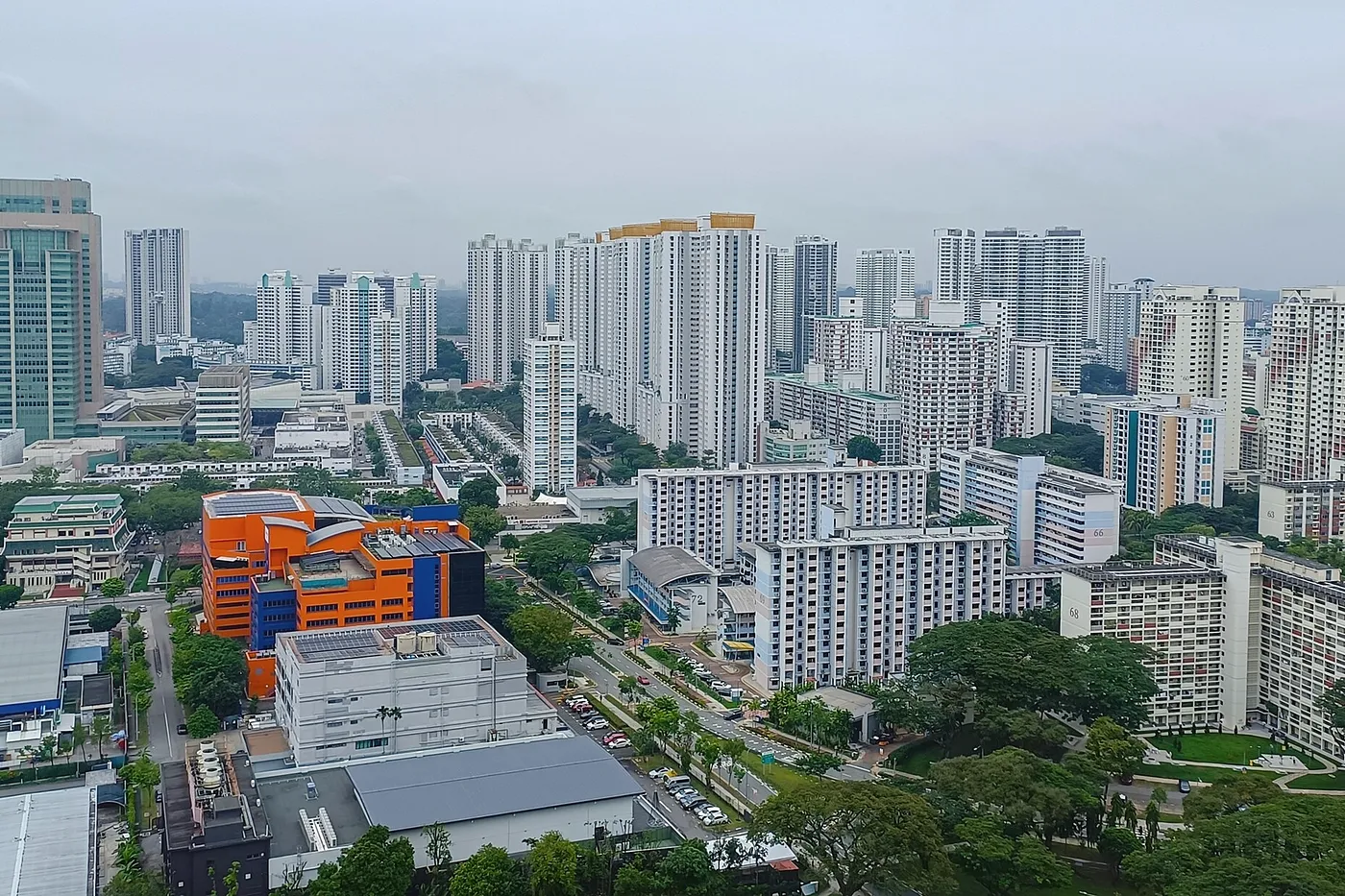
Entry 10 of 22. Singapore, 1990 to 2025.

  • 5.5 million residents, two in five of them non-citizens
  • elections on schedule, every one won by the same party since independence; opponents met with district redrawing and defamation suits
  • compulsory savings deducted from every paycheque, land the state owns and sells leases on, and the returns of its investment funds
Removal: 39 out of 100, on a scale from never to routinely.
Ownership: 60 out of 100, on a scale from private to state.
Spread: 44 per cent, on a scale from flat to steep.

Wages are taxed lightly. Instead a fifth or more of every paycheque is taken into a personal account the worker cannot touch, matched again by the employer, and the state decides which categories of thing that account may ever be spent on. The money is invested by state bodies whose returns are not published in full. The same state is the owner of nearly all the land and the controlling shareholder in the largest firms in every strategic sector, held through investment companies that report to the treasury rather than to a ministry.

A large part of the workforce enters on time-limited permits tied to one employer, with no path to becoming a citizen, and at the lower end of that workforce the employer holds the permit and the return ticket. Public speech and assembly are narrowly bounded, and defamation suits brought by officeholders against critics are a routine and effective instrument. Every person carries an official racial category, and quotas by that category are administered across schooling, public allocation and electoral districting as a deliberate mixing policy.

Entry 11 of 22. Yugoslavia, 1955 to 1980.

  • 20 million people
  • one party, no competing candidates, the leadership held by one man until his death
  • a levy on enterprise income, plus money borrowed from Western banks and wages sent home from abroad
Removal: 9 out of 100, on a scale from never to routinely.
Ownership: 62 out of 100, on a scale from private to state.
Spread: 22 per cent, estimated, on a scale from flat to steep.

This is the one arrangement in which the productive assets belong neither to the state nor to any owner. A factory is held in trust for society at large, and the people who work in it elect a council which appoints the management, sets what to make, and divides whatever is left after costs among themselves as income rather than as wages. Firms then buy and sell from each other at negotiated prices and compete for customers. The predictable consequence is that a firm behaves like a partnership maximising income per member, which means it is reluctant to hire.

Real fiscal power sits with six republics rather than the centre, and the difference in output per person between the richest and the poorest of them is several-fold and widens over the period. Uniquely among states organised this way, workers are permitted to leave for wages in neighbouring countries and to come back, and the money they send home becomes one of the largest sources of foreign currency. Borrowing from foreign banks pays for imported consumer goods, which is how a population under one-party rule ends up with a standard of consumption unlike any of its neighbours.

Entry 12 of 22. Germany, 1990 to 2025.

  • 83 million people
  • head of government chosen by an elected parliament, coalitions the rule, sixteen states holding real power of their own
  • payroll contributions to funds that are legally separate from the budget, plus a tax on income and one on sales
Removal: 89 out of 100, on a scale from never to routinely.
Ownership: 22 out of 100, on a scale from private to state.
Spread: 35 per cent, on a scale from flat to steep.

Firms are privately owned, and large ones are legally required to seat representatives of their own workforce on the supervisory board that hires and fires the management — up to half the seats. Below that, a council elected in each workplace holds a veto over scheduling, dismissal and the introduction of new methods. Minimum pay for most of the period is not set by statute at all but by agreements covering a whole industry at once, which means the floor is negotiated between two organisations and then applied to firms that were not in the room.

The country absorbs a neighbouring state of sixteen million people whose entire productive economy was publicly owned, and sells or closes essentially all of it inside five years through a single agency, while a transfer from west to east runs for three decades and is still running. Money moves continuously from richer states to poorer ones by constitutional formula. And the country sells far more abroad than it buys, every year for decades, which means it is steadily accumulating claims on other countries rather than goods for itself.

Entry 13 of 22. Iran, 1989 to 2025.

  • 88 million people
  • elected president and parliament, candidates screened by an appointed body, final authority with a cleric appointed for life
  • crude oil, plus enterprises owned by religious foundations that pay no tax and answer to no ministry
Removal: 18 out of 100, on a scale from never to routinely.
Ownership: 70 out of 100, on a scale from private to state.
Spread: 52 per cent, on a scale from flat to steep.

Two governments occupy the same territory. One is elected and administers; the other is appointed, can void the first's laws, disqualify its candidates before any vote is held, and commands the armed forces directly. Alongside the regular army stands a second military that also owns large commercial groups in construction, ports and telecommunications, so the force that puts down a protest and the contractor that builds the pipeline are the same organisation. Property seized after the change of government is held by religious foundations that pay no tax and publish no accounts.

Oil revenue funds subsidies deep enough that fuel, bread and medicine cost a fraction of what they cost anywhere else, which is also what makes the whole arrangement vulnerable to the price of a single commodity set elsewhere. Dress, alcohol, music and contact between unmarried people are regulated by patrol rather than left to custom. Women take a majority of university places and are barred by statute from a list of occupations, from certain judicial offices, and for much of the period from leaving the country without a husband's or father's consent.

Entry 14 of 22. United States, 1981 to 2008.

  • 250 million people
  • elected legislature and president; no effective ceiling on what may be spent to contest either
  • a tax on income with the top rate roughly halved, and a flat deduction from wages that rises to replace it
Removal: 86 out of 100, on a scale from never to routinely.
Ownership: 12 out of 100, on a scale from private to state.
Spread: 40 per cent, on a scale from flat to steep.

The organising idea changes from negotiating prices between organised employers and organised workers to letting prices be set by whoever will accept least. Industries whose rates and routes had been fixed by rule are released one by one. Membership of workers' organisations in private employment falls from roughly one in four to one in fourteen, so the negotiation that had set wages across whole industries simply stops happening. Production of goods moves to countries paying a small fraction of the domestic wage, under treaties that remove the duties which had made that uneconomic.

Household spending keeps rising while wages for most people do not, and the gap is filled by borrowing against the rising price of what a household already owns, an arrangement which works precisely as long as those prices keep rising. Retirement shifts from a sum the employer promised to pay to an account the worker funds and invests, so the risk of an unlucky decade moves from a company balance sheet to the individual. Money made from moving money grows from a small share of all corporate profit to something near a third of it.

Entry 15 of 22. Mexico, 1934 to 1988.

  • 70 million people
  • one party wins every presidential election for seven decades; the outgoing president names the next candidate
  • a state oil monopoly, plus tariffs that shelter domestic manufacturing
Removal: 24 out of 100, on a scale from never to routinely.
Ownership: 50 out of 100, on a scale from private to state.
Spread: 55 per cent, estimated, on a scale from flat to steep.

Membership of the governing party runs through organisations rather than through individuals. To be a worker, a farmer or a shopkeeper is to be enrolled in a body chartered by the state and affiliated to the party, and that body negotiates on your behalf with a government it is formally part of. A strike is therefore settled by the same apparatus that recognised the union calling it. Elections are held on schedule and counted to the required answer.

Land is redistributed on an enormous scale, but as collective grants held by villages which may not sell it, mortgage it or consolidate it, so the people who receive it remain permanently dependent on state credit, state seed and state purchase prices. Oil, electricity, rail, telephones and steel are nationalised and used to employ and to reward as much as to produce. Imports are taxed heavily enough to build a domestic manufacturing base that sells almost entirely to itself.

Entry 16 of 22. Japan, 1955 to 1990.

  • 120 million people
  • genuinely contested elections won by the same party for 38 years; the choosing happens inside its factions
  • household savings collected through the post office and lent on by ministries to chosen industries
Removal: 83 out of 100, on a scale from never to routinely.
Ownership: 20 out of 100, on a scale from private to state.
Spread: 32 per cent, estimated, on a scale from flat to steep.

Elections are real and the opposition is real, but the choosing is done inside factions of a single party, and the policy is written by a career civil service that survives every election result. Firms hold shares in each other in webs dense enough that buying one against its management's wishes is impossible, so the people running a company answer to its bank and its workforce rather than to anybody who owns a piece of it. That is the whole mechanism: ownership exists but it does not confer control.

Large employers offer work until retirement, pay by years served rather than by job, and deal with a workers' organisation confined to that one company. Perhaps a third of the workforce is inside that arrangement; the rest supply parts to it under contract at lower pay and absorb every downturn on its behalf. Farm households are protected by outright bans on importing what they grow, and their votes are weighted several times heavier than a city dweller's by districts that are never redrawn.

Entry 17 of 22. South Africa, 1948 to 1991.

  • 30 million people, four in five of them without a vote
  • a parliament elected by a racial minority; every person is assigned a racial classification at birth by statute
  • gold and diamonds dug by a workforce recruited on fixed contracts and forbidden to settle where it works
Removal: 18 out of 100, on a scale from never to routinely.
Ownership: 45 out of 100, on a scale from private to state.
Spread: 55 per cent, estimated, on a scale from flat to steep.

A classification assigned at birth determines where a person may live, what work he may be trained for, which school she may attend, whom either may marry, and which door of a building to use. Everyone in the majority category carries a document at all times which records permission to be where they are, and being without it is an arrestable offence prosecuted hundreds of thousands of times a year. Whole categories of skilled trade are reserved by statute for the minority.

Underneath the classification is a labour system, and the labour system is the point. Deep mining is only profitable with a very large, very cheap, and highly mobile workforce, so men are recruited on fixed contracts out of rural reserves and neighbouring countries, worked underground for a term, forbidden to bring their families, and returned at the end of it. The reserves absorb the cost of raising the worker and of keeping him when he is too old to work, which is what makes the wage payable. Political organisations are banned, opponents are tried for treason, and detention without charge is written into law.

Entry 18 of 22. India, 1991 to 2025.

  • 1.4 billion people, the largest electorate that has ever existed
  • elected at every level and turned out routinely; the poor vote at higher rates than the rich
  • a tax paid by a small minority — fewer than one in twenty file at all — plus a national tax on sales
Removal: 63 out of 100, on a scale from never to routinely.
Ownership: 35 out of 100, on a scale from private to state.
Spread: 51 per cent, on a scale from flat to steep.

Because the people with the least vote in the greatest numbers, their votes are worth buying, and they are bought in a specific way: grain at controlled prices to two thirds of the population, a legal entitlement to a hundred days of paid manual work a year for any rural household that asks, and cash sent directly into accounts opened by the hundred million for exactly that purpose. This is redistribution conducted as an electoral transaction, in the open, and it is effective on both counts.

Underneath it, most people work for themselves or for someone with no registered business, no written contract and no pension, so the labour law that exists applies to a small minority. Inherited rank still sorts who marries whom, who does which work, and who may draw water where, and the principal instrument against it is a quota of reserved places in schooling and state employment — which makes the classification a thing people also have reason to claim. The state keeps the railways, the coal and most of the banking, and licenses far less of everything else than it once did.

Entry 19 of 22. Chile, 1974 to 1989.

  • 11 million people
  • taken by the armed forces; the legislature dissolved, parties banned, opponents killed or disappeared
  • a state copper monopoly, a fixed share of whose revenue goes straight to the military
Removal: 8 out of 100, on a scale from never to routinely.
Ownership: 25 out of 100, on a scale from private to state.
Spread: 62 per cent, estimated, on a scale from flat to steep.

The armed forces hold sovereignty outright and use it to rewrite the ownership rules faster than any elected government could have. Firms taken over by the previous government are sold back, duties on imports fall from above ninety percent to ten, price controls are removed at a stroke, and the state pension is replaced with compulsory individual accounts managed by private firms — the first country anywhere to do it. Schooling is handed to municipalities and funded by a payment that follows each pupil, usable at a private school.

The sequence matters more than any single measure: workers' organisations are dissolved and bargaining suspended before the economic rules are changed, so wages adjust without anyone able to resist, and the people who would have organised the resistance are in detention or dead. Copper, the largest export, is not privatised at all, and a fixed proportion of its revenue is assigned directly to the armed forces by law, outside the budget. The arrangement is written into a constitution approved under conditions in which no campaign against it was permitted.

Entry 20 of 22. Russia, 2004 to 2025.

  • 145 million people
  • elections on schedule with the result settled beforehand; opponents barred, imprisoned, exiled or killed
  • oil and gas, supplying about a third of the state's income and most of its foreign currency
Removal: 27 out of 100, on a scale from never to routinely.
Ownership: 55 out of 100, on a scale from private to state.
Spread: 46 per cent, on a scale from flat to steep.

Property is private in law and conditional in fact. The largest holdings belong to individuals who acquired them in a single decade of transfers and who keep them at the leadership's discretion; displeasing it has cost several of them everything, which is a demonstration rather than an accident. Energy, banking, arms and aviation are returned to state control. Veterans of the security service hold executive positions across both government and business, so the two are not separate careers.

Broadcast media is state-run or state-aligned, and regional governors are appointed from the centre rather than elected for most of the period. Payments to households — pensions, birth grants — are used directly and visibly as the return the population receives for not contesting anything else. From 2022 the whole arrangement is reorganised around a war: factories run additional shifts on military orders, and the payment offered for signing a military contract exceeds several years of the median wage in the poorer regions, which turns recruitment into a straightforward transaction between the state and the places with the least.

Entry 21 of 22. China, 2001 to 2025.

  • 1.4 billion people
  • one party; no competing organisation permitted, leaders selected inside it, no vote above the village
  • state banks directing the population's savings, and local governments selling leases on land they cannot sell outright
Removal: 9 out of 100, on a scale from never to routinely.
Ownership: 55 out of 100, on a scale from private to state.
Spread: 42 per cent, on a scale from flat to steep.

The party holds the parts of the economy that everything else must pass through — the banks, the power, the rails, the network — while most people work for private firms which produce nearly all of what is exported and which carry a party committee inside their own management. All urban land belongs to the state and is leased for a term, so a local government finances itself by selling leases, which makes continuous construction not a policy but a revenue mechanism.

The registration record survives from the previous arrangement in modified form: several hundred million people work in cities where they cannot claim the schooling or the medical coverage attached to where they were born, so a very large share of the workforce is permanently temporary in the place it works and leaves its children behind. What households consume is a strikingly small share of what the country produces; the rest is saved, passed through banks, and turned into capacity. Identification, movement, payment and speech are recorded continuously and matched against each other by machine.

Entry 22 of 22. United States, 2009 to 2025.

  • 335 million people
  • elected legislature and president, control alternating between two parties at short intervals
  • a tax on income concentrated on the top tenth, and a central bank creating money at a scale without peacetime precedent
Removal: 86 out of 100, on a scale from never to routinely.
Ownership: 15 out of 100, on a scale from private to state.
Spread: 45 per cent, on a scale from flat to steep.

After a credit collapse the state guarantees the banking system without taking it over and without changing who runs it, and the instrument it reaches for is not the budget but the creation of money by the central bank, on a scale with no peacetime precedent, sustained for more than a decade. That money raises the price of assets before it raises anything else, and assets are held overwhelmingly by the top tenth, so the mechanism used to prevent a collapse mechanically widens the distance it was deployed to protect.

Medical coverage remains attached to employment, with a subsidised private market underneath it for those without a job that provides it. A handful of firms controlling search, retail, advertising and messaging accumulate cash reserves larger than most states' annual budgets, and the rules written for earlier industries do not reach them. Pay at the very bottom rises for the first time in decades, while the cost of schooling and of medicine rises faster. Political conflict organises itself around identity and around which places are gaining or losing, rather than around who owns what.